Blog & Insights
Buying a Dental Practice While Working as an Associate: How to Make the Transition Smoother
Buying a dental practice is one of the most exciting—and complex—steps in a dentist’s career. Whether you are currently working as an associate or preparing to purchase a practice while not actively practicing, the process can feel overwhelming. There are checklists to manage, timelines to coordinate, professionals to consult, and decisions that can have a lasting impact on your ownership experience.
In many ways, buying a practice can feel like building a house. You need the right plan, the right sequence, and the right team helping you make informed decisions. Without experienced guidance, it is easy to rely on guesswork, internet research, and advice that may not fit your specific situation.
The Challenge: Too Many Moving Pieces
A successful practice transition requires more than simply reviewing legal documents, negotiating terms, or understanding the valuation. Those pieces are important, but ownership readiness also depends on the operational details that happen before and after closing.
New owners must think through credentialing, revenue cycle management, staffing, patient communication, profitability opportunities, vendor transitions, systems, scheduling, and team expectations. Each decision affects how smoothly the practice moves from one owner to the next.
Why Experienced Guidance Matters
Working with someone who understands the logistical side of dental practice ownership can make the entire process feel less reactive and more strategic. The right advisor does more than help coordinate legal work, lease language, building considerations, valuations, and negotiations. They also help you prepare for the practical realities of stepping into ownership.
Think of this role like a general contractor for your transition. A strong advisor helps align the right people, clarify the timeline, anticipate gaps, and keep the process moving toward the outcome you want.
Key Areas to Address Before and After Closing
· Strategic credentialing: Planning ahead so insurance participation and reimbursement timelines do not create unnecessary disruption.
· Revenue cycle management: Reviewing billing, collections, claims, and follow-up systems to protect cash flow from day one.
· Profitability opportunities: Identifying gaps in scheduling, case acceptance, hygiene performance, fees, overhead, and operational efficiency.
· Team evaluation and hiring: Understanding which roles are essential, where support is needed, and whether every existing team member is the right fit moving forward.
· Patient and team transition: Entering the practice with respect, clarity, and a plan thatsupports trust with both the team and patient base.
Ownership Starts Before the Closing Date
The most successful transitions are rarely accidental. They are planned with intention. Before closing, future owners should understand what needs to happen, who is responsible for each step, and how each decision supports the long-term health of the practice.
After closing, the focus shifts to leadership, communication, implementation, and refinement. This is where preparation pays off. With a clear plan, you can step into ownership with greater confidence and avoid preventable missteps.

Why Practice Preparation Matters Before a Dental Transition
When a dental practice owner starts making operational changes before a transition, the team may naturally wonder: why now? For long-standing team members, new systems, accountability, and structure can feel unexpected—especially if things have been done the same way for years. But the reason is often simple: the doctor is preparing the practice for its next chapter.
The Question Every Team Asks
“Why is the doctor wanting to change things now—and not ten years ago?” It is a fair question. In many practices, the answer requires a thoughtful balance of honesty and reassurance. The goal is not to disrupt the team; it is to organize and strengthen the practice so it can transition successfully when the time is right.
Preparing the Practice Like Preparing a Homefor Sale
Think of it like getting a house ready to put on the market. The foundation may be solid, but small improvements can dramatically change how others perceive its value. In a dental practice, those improvements may include clearer job roles, stronger scheduling systems, cleaner reporting, tighter handoffs, and more consistent patient communication.
These changes may seem subtle day to day, but they can make the practice easier to evaluate, easier to operate, and more attractive to a future associate, buyer, or transition partner.
Why Team Buy-In Matters
One of the most rewarding surprises during transition preparation is how many team members welcome structure. Often, they have been waiting for clearer expectations, better systems, and a stronger sense of direction. When the “why” is communicated well, change can create energy instead of resistance.
Team members who lean into the process also have an opportunity to stand out. They become part of the future value of the practice—not just because of what they know, but because of how they contribute to stability, culture, and continuity.
Small Changes Can Influence Big Outcomes
Even one year of focused preparation can make a meaningful difference. Clean systems, organized metrics, stable staffing, and consistent operations help tell a stronger story about the practice. For a doctor approaching retirement or considering a future sale, that preparation can support a smoother transition and a stronger valuation conversation.
The best time to prepare for transition is before the practice feels urgent to sell. With the right plan, change does not have to feel overwhelming. It can feel intentional, manageable, and aligned with the doctor’s long-term goals.
Why Hygiene Compensation Is Really a Profitability Conversation
“I can’t afford the hygiene market right now.” Practice owners and managers are saying it everywhere. And on the surface, it makes sense: wages are rising, hiring is competitive, and margins feel tighter than ever.
But here is the truth many practices are missing: hygiene compensation is not only a payroll issue. It is a profitability, production, patient-care, and retention conversation.
The Real Problem Is Not Just Pay
Our sister company, Dental Recruiters, works tirelessly to place high-performing team members in practices across the country. One pattern we continue to see is this: a practice needs to hire for hygiene, but the numbers do not support increasing compensation or considering a new compensation model.
At the same time, the practice may also hesitate to invest in systems, training, scheduling support, or leadership development that helps the hygiene team produce at a higher level. That creates a frustrating cycle: the practice cannot afford more pay because production is not where it needs to be, but production cannot improve without the right support.
Hygiene Is a Value Center
At its core, the dental team shows up to serve people. That is powerful. When hygienists educate, diagnose, build trust, and help patients understand the value of care, patients become healthier versions of themselves.
When a practice consistently provides value, revenue follows. When revenue follows, profitability improves. And when profitability improves, practices are better positioned to reward their teams, retain top performers, and become more attractive to the next high-performing dental hygienist.
Compensation Without Strategy Is Risky
Raising wages without addressing hygiene systems can quickly compress margins. But refusing to adjust compensation while expecting stronger performance can create turnover, burnout, and hiring challenges.
The better path is to connect compensation to clarity. That means defining expectations, tracking the right metrics, strengthening periodontal protocols, improving patient communication, and building a compensation structure that supports both team success and practice profitability.
Where Practice Leaders Can Start
· Know your numbers. Review hygiene production, compensation, chair utilization, periopercentage, reappointment rates, and overall profitability.
· Clarify expectations. Make sure the hygiene team understands what success looks likeclinically, operationally, and financially.
· Invest in the team. Training, communication systems, scheduling support, and leadership alignment can help production grow without compromising patient care.
· Consider the right compensation model. Hourly, hybrid, bonus-based, or production-supported models can all work when they are tied to clear benchmarks and ethical care standards.
· Build a retention-minded culture. Compensation matters, but so do respect, autonomy, communication, and a practice environment where people can do excellent work.
The Bottom Line
If your practice feels like it cannot afford the hygiene market, the answer may not be to simply pay more or hold the line. The answer is to build a hygiene department that is supported, productive, profitable, and aligned with the value it delivers to patients.
Because when your team is equipped to serve patients well, the practice wins. Patients receive better care, team members see a path for growth, and profitability becomes the result of value—not pressure.

Is Your Dental Practice Letting Insurance Drive the Strategy?
For many private dental practice owners, insurance participation feels like a necessary part of doing business. It can provide patient flow, offer a sense of stability, and make the schedule feel more predictable. But when insurance decisions are made from fear instead of strategy, the practice can unknowingly limit its profitability, growth, and team mindset.
At Dental Consulting Company, we often see practices operating from a scarcity mindset: the belief that there are not enough patients who will value quality dentistry without insurance driving the relationship. That mindset does not stay with the doctor alone. Over time, it can shape the language, confidence, and behavior of the entire team.
The Hidden Cost of Staying Comfortable
Insurance participation is not automatically wrong. In fact, the right payer strategy can support growth, patient retention, and access to care. The problem begins when a practice participates in plans simply because it feels safer than making a change.
We have presented analyses showing that changes to a practice’s relationship with some or all insurance plans can create significant revenue opportunity—in some cases, approaching a $1 million difference. Yet even with compelling numbers in front of them, some practices hesitate to act.
Why? Often, the bottleneck is not the math. It is the mindset.
When the Team Mindset Becomes the Growth Ceiling
Doctors are not always the only decision-makers in the room, even when they own the practice. Practice administrators, front office teams, and clinical team members can strongly influence whether change feels possible or risky. If the team believes patients will leave, the schedule will fall apart, or the practice cannot succeed without certain plans, that belief can become the ceiling for growth.
That is why insurance strategy is never just a financial conversation. It is a leadership conversation. It requires clear communication, data, planning, and a team that understands the “why” behind the change.
A Better Way to Approach Insurance Change
Changing your insurance participation does not have to mean making a sudden, all-or-nothing decision. The strongest approach is intentional, phased, and customized to your practice. A thoughtful strategy may include evaluating payer performance, understanding patient mix, strengthening verbal skills, preparing the team, and mapping out how the practice will communicate changes with confidence.
Is it easy? Not always. Is it easier than many practice owners think? Absolutely. With the right plan, the right language, and the right support, practices can move away from fear-based decision-making and toward a healthier, more profitable future.
You Owe It to Yourself to Explore the Possibility
In our experience, practices rarely regret creating a smarter insurance strategy. What they often regret is waiting too long to look at the numbers, challenge old assumptions, and lead the team into a new level of confidence.

Expansion Isn’t Always the Answer: How to Grow Dental Practice Profitability with the Patients You Already Have
Every dental practice owner eventually faces a big question: is it time to expand? Maybe that means adding more physical space, bringing on another provider, hiring additional hygienists, or rethinking the practice’s insurance participation to improve reimbursements. While expansion can be the right move for some practices, it should never be the default answer.
The best growth strategy depends on the vision, the current health of the business, and the metrics that reveal whether the practice is truly ready for more—or whether there is already untapped profitability sitting inside the existing patient base.
Start with your Vision
Before making a major business decision, get clear on the goal. Do you want to work less and make more? Is the priority to increase profit margins, create better work-life balance, and reduce dependency on volume? Or is the vision to serve more patients, expand treatment options, fill more chairs, or eventually grow into another location?
Those goals can lead to very different strategies. A practice focused on profitability may need to optimize systems, marketing, case acceptance, and insurance participation before adding overhead. A practice focused on expansion may need to prove that patient demand, provider capacity, and operational consistency are already strong enough to support growth.
Look at the Metrics Before You Add More
Dental practice growth should be driven by data, not pressure, emotion, or assumptions. Before expanding real estate, hiring an associate, adding hygiene hours, or changing the insurance landscape, evaluate the numbers that show where the practice stands today.
- Active patient count: How many patients are truly engaged and returning for care?
- New patient flow: Is marketing consistently attracting the right type of patient?
- Patient retention: Are patients staying connected to the practice after their first visit?
- Write-off percentage: Are insurance adjustments limiting profitability?
- Provider and chair utilization: Are existing rooms, schedules, and team members being used efficiently?
- Case acceptance: Are patients saying yes to the care they need and value?
According to dental industry KPI guidance, practice owners commonly monitor production, collections, overhead, active patient count, new patient conversion, and accounts receivable aging to understand business performance and make better operational decisions.
The Hidden Opportunity Inside Your Existing Patient Base
For many practices, expansion is not the first step toward increased profitability. The proof is in the pudding: with the patients already in the practice, there may be endless untapped potential right at your fingertips.
Before taking on more space, payroll, or provider complexity, consider whether the practice is fully maximizing its current base. Are overdue hygiene patients being reactivated? Are incomplete treatment plans being followed up on? Is the team equipped to communicate value clearly? Are marketing efforts converting into the right patient relationships?
When Expansion Makes Sense
Expansion may be the right decision when the practice has strong demand, healthy retention, efficient systems, and clear provider capacity needs. If the schedule is consistently full, patients are waiting too long for appointments, marketing is producing qualified new patient flow, and the financial model supports additional overhead, then growth can create meaningful opportunity.
But if the current practice still has open chair time, inconsistent follow-up, high write-offs, weak retention, or low case acceptance, expansion may amplify existing problems instead of solving them.
Master the Marketing Base “Trifecta”
A profitable dental practice needs more than one marketing lever. It needs a balanced foundation that attracts new patients, retains existing patients, and reactivates patients who have fallen out of care. When these three areas work together, practices can grow smarter without immediately adding more overhead.
Are Your Dental Assistants Practicing at the Top of Their License?
In a thriving dental practice, every team member should be working at the highest level of their training, licensure, and confidence. For dental assistants, this means doing far more than simply supporting the doctor chairside. It means anticipating the next step, managing the flow of restorative procedures, preparing the operatory with precision, and helping the dentist stay focused on the clinical work only they can perform.
When dental assistants are empowered to practice at the top of their license, they absorb much of the operational “noise” that can otherwise pull the doctor away from their zone of genius. Instead of the dentist managing every detail, the assisting team is aligned, prepared, and thinking two steps ahead. The result is a smoother schedule, stronger clinical efficiency, and a better experience for both patients and the team.
The Opportunity Hidden in Your Restorative Workflow
Many dentists find themselves stepping into tasks that could be delegated, not because their team is unwilling, but because systems, expectations, and training have not been clearly established. Over time, this can limit production, create unnecessary stress, and prevent the practice from operating at its full potential.
Imagine walking into the day knowing your assistants are fully prepared, understand the clinical standards, and can confidently guide the flow of treatment. Imagine your team telling you what is happening, where you are needed next, and what has already been handled. That level of alignment can create meaningful gains in productivity, patient care, and team satisfaction.
High Performance Requires More Than a Team Meeting
Creating this kind of assistant-driven efficiency does not happen overnight, and it does not happen from a brief reminder during a team meeting. It requires strategy, clearly documented clinical standard operating procedures, intentional training, and consistent follow-through.
Practice owners are often already carrying a full load. Between patient care, leadership, business operations, and team development, there may not be enough time to build and implement these systems alone. That is where professional guidance can make a significant difference.
Build a Team That Helps You Produce More and Lead Better
With the right systems in place, your dental assistants can become a powerful driver of practice growth. They can help increase production, improve the patient experience, reduce doctor stress, and create a more cohesive clinical environment. Most importantly, they can help you spend more time doing the work that only you can do.
If your assistants are not yet practicing at the top of their license, now is the time to evaluate your systems, clarify your expectations, and create a pathway for your team to succeed. A more aligned, efficient, and productive practice starts with intentional implementation.

How to Enhance Your Patient Experience in 5 Easy Steps!
2019 is the year to differentiate yourself in private practice, jump on board!
1. First Impressions

Take some time to visit/call surrounding practices and tally how many individuals should actually be in their inherited roles at the front desk. It takes one habit of one individual to put a damper on your most important practice metrics. Put aside emotions and take time to re-structure and coach.
2. Amenities

If you don’t have at least 5 of the following you have some shopping to do: noise cancelling headphones, TVs/tablets, warm facial towels, hand wax, cookie/coffee bar, hot stones/aromatherapy, warm blankets/pillows. Can’t afford the “fluff”? Then your patients can’t afford to spend time talking to others about how wonderful your practice is.
3. Care Calls

Your patient has invested in dentistry, undergone periodontal therapy or had their first visit. A small token of appreciation will go further than you know. Pick up the phone to follow-up, you won’t regret it.
4. Greeting Them vs. Calling Them

“BRENNNNDAAAA”! How many of your team members “call” their patients back vs. personally approach to “greet” them? Know the difference, feel the change.
5. Know Them, KNOW Them, kNoW Them
The patient has been faithfully coming for the last __ years yet we still ask if they have a dog, wear a guard, and use an electric toothbrush. Know them, enlist trust with them, your treatment acceptance and recall metrics will thank you.
Patients expect team members to treat them with respect, provide quality care and be punctual with appointment times. What they don’t expect is for you to anticipate their needs. Strive to anticipate and create the WOW factor that will leave your patients ready to accept treatment, keep their continuing care appointments and send referrals!
The Dental Marketing Base – Trifecta
Let’s be clear, marketing is SO much more than what is listed below. Here are some guidelines on what to master before you realize you’ve dumped an astronomical amount of cash flow into a 3rd party marketing/advertising plan just to drive patients to an outdated brand.
1. Website and Brand Recognition

What do you think about when you see the golden arches (McDonalds), half eaten apple (Apple), bullseye (Target)? Ask yourself, would you still consume their products if they hadn’t updated their logo in 10+ years? Your website and brand work the same way.
General guidelines for refreshing your brand:
- Website — Re-fresh every 6 months
- Headshots/interior/exterior/op photos — Headshots every 1–2 years; photos every 3–5 years
- Video — Every 3–5 years
- Logo — Re-fresh every 5 years (not re-design)
2. Social Media

After you have mastered #1, review your patient demographic and set up social media accounts to promote your practice. Plan to post content 1x/week and create a strategy to increase from there.
Recommended platforms:
- LinkedIn — At least all doctors should have a LinkedIn account and be active with making connections. Patients will connect, look at how “well-known” they actually are, and take a deep dive into their educational and professional background.
- Facebook — Practice page. The majority of your patients are VERY active on this platform, especially the boomers.
- Instagram — Practice handle. The most highly utilized platform among ages 18–40. Develop your own hashtags and start streaming content into your feed and stories.
3. Reviews

The average patient takes your organic reviews seriously. Create a Google listing and implement a campaign to gather “feedback” rather than “reviews” from your patients. A sweet spot for your reviews is between 4.7–4.9.
If you haven’t mastered the top 3 and are allocating advertising funds elsewhere, you are most likely donating your hard-earned profits to a black hole instead of your money market, 401K or index fund.
If you have mastered the top 3, go ahead and take 2–3% of your collections, create a budget and develop marketing growth strategies based on your practice needs.
For more information on how you can master your marketing base “Trifecta” contact DCC: hello@dentalconsultingco.com

5 Apps for the Dental Entrepreneur!
Hint: it has nothing to do with Dentistry
All too often I hear these comments:
- I don’t know how you manage it all!?
- You are so busy — are you insane?
My personal favorite recently by a prospective business coach after hearing my story and career background — “(insert long pause)…Shannon, you will never work for another person again in your life. You’re kind of a…maverick…a rebel.”
Here are my favorite go-to apps to keep me somewhat organized, healthy (mentally and physically) and productive!

1. Google Keep
Do you love post-it notes and lists that you can rearrange? Google Keep keeps me organized which boosts my productivity. I have lists color coordinated and labeled. This App is the first thing I look at drinking my pre-workout in the morning and at the end of a workday. Whether it is setting myself up for success at work, updating a grocery list that I share with my hubby, or communicating with my teams — it gets 5 stars in my book!
2. Audible & Podcast Player
I am a big fan of capitalizing on NET time (Tony Robbins creation). My audible subscription and podcast player helps me fit in relevant and fresh information into this busy mind. Books and podcasts revolve around leadership, business ownership, parenting and health/wellness. Popular NET time opportunities for me: commuting, doing chores, getting ready, walks and waiting for appointments to start.
3. YourHour
YourHour tracks the amount of time, peak hours of use and HOW MANY TIMES YOU UNLOCK your phone each day. Before I pick up my phone I ask myself…is it worth being tracked? If I need increased intervention I will put my phone on airplane mode or do a “hard” shut-down (mostly at night when I am with family).
“Be present where your feet are” — Rachel Hollis
4. 21 Day Fix & Waterlogged
Health is a top priority for me. The healthier I am, the happier I am. It increases my success and productivity at work, sets the mood and example for parenting and decreases stress. I’ve tried various apps to keep me accountable for food and water intake and these 2 have stuck due to the pure simplicity of tracking.
5. Calm
In the last year I have experienced intermittent insomnia for the 1st time in my life. I have also dabbled in meditation after my AM workout or in place of it if I am too sore to function. Getting centered or getting to sleep…it helps with both!
For more tips on productivity, entrepreneurship and OWNING your time visit www.dentalconsultingco.com.

New Year – New Reflections – New Goals
A New Year brings exciting energy with business ownership. Here are some of my favorite things to do as an entrepreneur at year-end/start of January to set up for another successful and productive year ahead!
1. Clean and organize your entire office and desk space.
Less clutter will boost productivity and focus for the upcoming year.
2. Calendar audit of the prior year.
I use an online, interactive calendar through Google that is color coordinated based on various categories. I review the entire year that was just closed out to reflect on meetings/events whether they were with my team, colleagues, networking or even potential clients and current clients. Were they a productive use of time? Did the time I spent push me towards my revenue goals for the business? I then create blocks for the upcoming year to ensure I hit my goals in all categories (personal, professional, profit generating).
3. Set an annual revenue goal for all businesses.
This originates from our family’s personal monthly budget, personal wish list that involves bigger purchases for the upcoming year, retirement/investment planning and lastly business development costs that we foresee in the next 12 months. Our annual revenue goal factoring in overhead percentage is entered into a workbook used by our internal operations team to function as a motivational tool to hit daily, weekly and monthly revenue goals.
4. Organize your “will do” lists.
My “will do” lists are online via Google Keep. I have lists for daily goals as well as projects in the “parking lot” that I know I will not be finished within 30 days. I look at these goal lists before closing out each workday and first thing in the morning, to ensure I stay laser focused.
5. Reflect on your opportunity 10 list.
This was a practice encouraged by my business coach to focus on the 10 goals I want to achieve within the next 10 years as well as strategies for each. Sometimes this involves additional money, sometimes additional time away from work or a re-focus on health and wellness. This list is visited throughout the year as a big picture focus tool.
If you are interested in learning more about any of these entrepreneur New Year practices please reach out to shannon@dentalconsultingco.com to set up a strategy call!
Happy planning!

There is nothing sweeter than TIME
As a Mom of 3 (soon to be 5), business owner x2, wife, friend plus more, I am often asked “how do you find the time for it all”?
The answer: without complete devotion and intention to maximizing time given to you, you will find you never have enough.
My Top 10 Routines to Maximize Time
1. Setting goals.
I am a list person (not paper, app list because well…efficiency!). I have immediate goals (will be completed within 30 days) as well as pipe dreams in my “parking lot.” These are reviewed before I close my computer in the evening and first thing in the morning. Having an immediate list of a task that needs to be tackled next reduces the amount of time trying to decide what is my next priority.
2. Being present where my feet are.
The workday is the workday, family time is family time. Work schedules can be a normal schedule during the week, or they can extend into an evening or weekend. Neither is harmful, but what is harmful is trying to dedicate your mental energy to both at the same time. Did I mention this is also “inefficient” and rapidly deteriorates…time. Be fully present where your feet are.
3. Reduce time on TV/social media.
Reaching professional and personal goals requires work. Everyone needs R&R, but I have to accept the trade off that comes with it — lack of productivity. Reducing evening TV to weekends has helped to re-direct my brain to attempting Mom tasks and work tasks after the kiddos go down.
4. Timer productivity.
To assist with productivity while at my desk, I am known for timer utilization to achieve “flow state of mind.” I will set my alarm for 1 hour and 15 minutes (seems to be my sweet spot). During this time, I am fully dedicated to my task — outlook is offline and phone is on airplane mode. When my timer is up, I set it for 15 minutes to get up, do a house chore, eat, or refill my beverage, then back at it. Focused timed tasks avoid falling into the trap of Parkinson’s Law and eliminate distractions.
5. Learning in pockets of time that are gifted to us.
Getting ready for the day, doing dishes, cooking, time spent in the car…or even the car wash at that. We are all gifted pockets of time throughout the day which I take full advantage of by listening to an audiobook or podcast. Harness the power of what Tony Robbins calls N.E.T time (no extra time). Capitalize on this concept and you will find yourself finishing 1–2 books a month.
6. Sleep.
I’ve ditched the mentality of getting minimal sleep, pulling all-nighters and cracking my computer open after 10:00 pm. I substituted that with 7–8 full hours of sleep. My productivity skyrocketed. Plan out your sleep to a healthy amount and save time by being more productive in exchange throughout the day.
7. Morning routine — move my body.
After my youngest was born, I vowed to start each morning with a full workout and have diligently followed a 6-day-a-week plan of strength training and agility exercise before the house wakes up. Interestingly enough, the healthier I get the more productive I am and the more money I make — who would have thought?!
8. Delegate.
Tasks such as cleaning, grocery shopping and sometimes…cooking are outsourced. None of those tasks personally bring me joy, they take time away from work, kids, family and friends. All costs are re-couped during my maximum productivity practices during the day, and it is money well spent.
9. Partner roles.
My husband and I share several Google calendars and have identified our strengths as homeowners and parents. Establishing roles reduces arguments that surround “who does what” and saves time by working together efficiently.
Single parents — hats off to you accomplishing all of the above solo and reaching your goals!
10. Saying no.
My annual calendar audit — looking through the past year on January 1st helps to identify trends that are no longer serving my goals. These could be outings with friends, business meetings, partnerships and affiliations that take up time, but aren’t providing self-fulfillment in return. Saying no frees up time to dedicate elsewhere.
I hope these 10 routines help in your journey to discover more TIME. I would love to hear your best practices! Email hello@dentalconsultingco.com to continue the conversation!
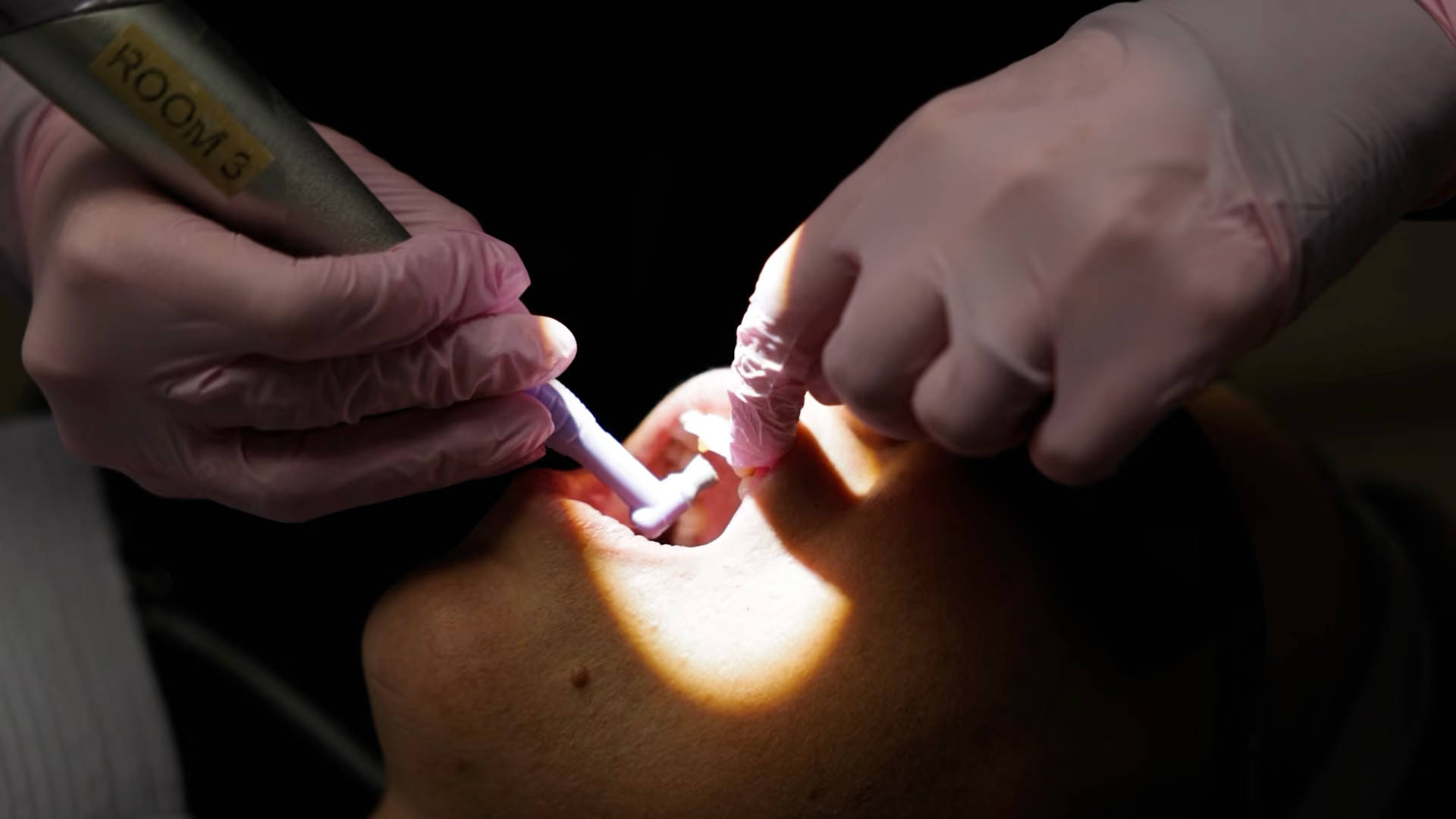
Lucrative Lunch Hour – Lasers 101
Do you have a diode laser collecting dust in your practice and want to learn how to maximize its use for patient care?
Are you ready to elevate your practice and enhance patient care? This Lucrative Lunch Hour will help you discover how diode lasers can revolutionize your patient care and boost your profits!
What to Expect
- Lasers 101
- Types of Lasers
- Lasers and Tissues
- Periodontal Disease Basics
- How Lasers Can be Used in Patient Care
Did you know? It’s estimated that almost 50% of adults have some form of periodontal disease and their risk increases to 70% once they hit age 65. Therefore, it’s likely that only approximately 25–30% of your patient base is actually “healthy.” The good news — your hygienists can use diode lasers during your patients’ continuing care appointments, active periodontal therapy, and maintenance visits to reduce the bacterial load that causes these periodontal infections. The end result — 50–70% of your patient base will be happier and healthier and smiling more!
To watch the full Lucrative Lunch Hour click here:

The Secret to Better Hygiene Profits and Practice Success
Listen to our very own Shannon Snell, the powerhouse behind Dental Consulting Co and owner of Dental Recruiters. Shannon brings over a decade of experience in dental consulting, helping practices improve profitability through smarter systems, leadership, and compensation models.
If you’ve been feeling the pressure of the labor shortage and the rising costs of running a practice, this episode is packed with practical advice on how to create a more sustainable and profitable work environment for your team. Shannon is here to talk about one of the hottest topics in the industry: hygiene compensation models. Trust us—you won’t want to miss this insightful conversation.
Listen here ›››

New Earned Sick and Safe Leave Statute - MN 2023
Minnesota statute for new earned sick and safe time — updated for 2023. Created and presented by Lisa C. Netzer, J.D. (True North Practice Transitions) and Tracey Gutzmer (Dental Consulting Company).

Pregnancy, Maternity Leave & Lactation in the Workplace - MN 2023
Information on MN statute addressing new changes for pregnancy accommodations, maternity leave and lactation in the workplace — updated for 2023. Created and presented by Lisa C. Netzer, J.D. (True North Practice Transitions) and Tracey Gutzmer (Dental Consulting Company).
Non-Compete Laws & Agreements - MN 2023
Changes to MN non-compete laws and how to protect your business — updated for 2023. Created and presented by Lisa C. Netzer, J.D. (True North Practice Transitions) and Tracey Gutzmer (Dental Consulting Company).

Lucrative Lunch Hour: Implant Care for the Hygiene Chair
Are you a Dental Hygienist looking to expand your knowledge and skills in implant care? Join us for our Lucrative Lunch Hour to discover best practices for the care and maintenance of dental implants, ensuring long-term success and patient satisfaction.
What to Expect
- What makes a patient a candidate for an implant?
- Implant periodontal classifications
- Implant care and maintenance in Dental Hygiene
To watch the full Lucrative Lunch Hour, click here:

Do Not "Fall" Into the Autumn Dental Hygiene Slump: Strategies for a Productive Dental Hygiene Schedule
Our team has compiled a list of action items to help practices maintain, not necessarily full, but highly productive, Dental Hygiene schedules during the fall months. These strategies are designed to optimize your team's time, enhance patient care, and prepare your practice for a strong finish for year end.
12 Tips for Ensuring a Full and Productive Dental Hygiene Schedule
- Assess Provider Needs Based on Active Patient Count — Evaluate how many Dental Hygiene providers you need to serve your current patient base.
- Implement Block Scheduling for Perio and New Patients — Reserve dedicated time slots to ensure these high-value appointments are prioritized.
- Achieve a 90% Pre-Appointment Rate — Aim to pre-appoint at least 90% of patients and consider scheduling multiple future visits when appropriate.
- Diagnose Disease and Curate Recare Intervals — Use clinical findings to personalize recare frequency, improve patient health outcomes, and enable your provider to run on scheduled appointment times.
- Instill Value Within the Appointment — Pinpoint a “pearl” of importance for the patient’s next appointment. Be sure to share with the patient and document to reduce future cancellations and no-shows.
- Establish a Dental Hygiene Scheduling Standard Operating Procedure (SOP) — Ensure scheduling is successful by implementing a playbook, process, or system that suits the needs of your practice.
- Coordinate with Front Office and Restorative Teams — Identify patients needing restorative care and bundle appointments for convenience.
- Enforce a Clear Cancellation/Failure Policy — Set expectations and reduce last-minute gaps in the schedule.
- Utilize Waitlist Auto-Notification Features — Fill openings quickly by notifying patients when availability changes with a click of a button.
- Send End-Of-Year Benefit Notifications — Remind patients to use their remaining insurance benefits before they lose them.
- Audit Automated Recare Systems — Ensure messages are being sent effectively and allow for easy patient response.
- Personalize Recare Outreach — Use targeted phone or text messages for patients who are due or overdue. Tailor your verbiage to gain results with scheduling vs. simply completing a task of “recare.”
Interested in diving deeper into these strategies? We would love to schedule a 30-minute session with you to explore how we can tailor these tips to your practice’s unique needs.
Reach out to our team at Dental Consulting Company today: hello@dentalconsultingco.com

Dental Hygiene Without the Insurance Lens: A Mindset-Driven Approach
Dental Hygienists are embracing a philosophy that prioritizes patient care over insurance constraints. They never need to know what kind of dental insurance their patients have, or even if they have any.
Why? Because insurance should not dictate the quality of care you provide. Shift the focus to preventative and comprehensive treatment. Leave discussions about money at the door. Instead, channel high-frequency energy that empowers patients to make decisions based on health, not coverage.
The Mindset Shift: From Scarcity to Confidence
Dental Hygienists do not need benefit breakdowns to build trust. Relying on insurance details can become a crutch—a fallback when we are not confident in our prescribed services. Operating from this mindset lowers our energy and limits our impact. When you lead with clinical clarity and conviction, patients respond with trust, not hesitation.
The Dental Hygiene Insurance Cheat Sheet
While insurance does not drive your care, do keep a few key trends in mind to avoid unnecessary roadblocks.
#ProcedurePotential Coverage Headache1Vertical BWXUses FMX frequency2Single BWXUses BWX frequency3SRP DocumentationMore than 2 quadrants in one day may be denied without time documentation4Recare SchedulingSchedule 6-month patients for 6 months + 1 day5SRP Before Perio MaintenanceMust be completed before switching to maintenance6No Alternating Perio MaintenanceShould not alternate with prophy7Same-Day CodingAvoid charging D4346, prophy, SRP, and maintenance on the same day8Fluoride CoverageLess than 5% of adults have it9SRP Re-treatmentOften covered if 2–3 years have passed10Follow-Up TimingMinimum 15 days post-FMD for SRP, D4346, or prophy11FMD + ExamCan be done same day12PA + BWX>3 PA’s + BWX may be routed as FMX13PAN + BWXLower reimbursement if done same day14SRP X-ray RequirementFMX needed within 3–5 years15D4346 Documentation>30% bleeding + gingivitis diagnosis required. I/O photos help16Subgingival AntimicrobialsCoverage is 50/5017Laser Bacterial ReductionConsidered a technique, not a billable service18FMD FrequencyTypically reimbursed once in a lifetime19Sealant Age LimitRarely covered after age 1720Perio DiagnosisRequires charting 6 points of recession21D0180 CodeFull mouth probe required same day (not PSR)
Dental teams have spent years mastering insurance plans to serve patients better. However, what if we helped patients go beyond their insurance-driven mindset altogether?
Contact us today to learn how to shift your practice toward empowered care: hello@dentalconsultingco.com
Understanding Minnesota's New Paid Break Law: What Dental Practices Need to Know
Minnesota's updated meal and rest break requirements, effective January 1, 2026, represent one of the most significant changes to the Minnesota Fair Labor Standards Act (MFLSA) in years. These updates clarify minimum break times and require employers to rethink how they structure the workday. This has ruffled feathers in dental practices, where schedules are tight and patient care is continuous.
Beginning January 1, 2026, Minnesota employers must provide qualifying employees a paid rest break of at least 15 minutes that:
- Must occur within each four consecutive hours worked
- Must be paid if under 20 minutes
- Is intended for restroom use and general rest
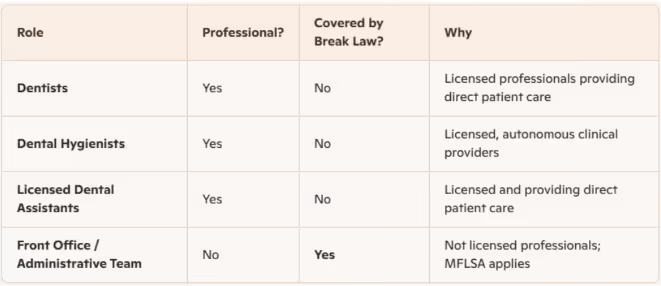
The MFLSA applies to “employees,” but Minnesota Statutes 177.23, subdivision 6 excludes certain categories, such as professionals, from the definition of “employee” for break-law purposes. According to the Minnesota Department of Labor and Industry, professionals are not covered by the meal and rest break requirements.
How Practices Can Incorporate the Change
Consolidate Breaks into a 1-Hour Lunch
- 15 minute paid rest break
- 30 minute unpaid meal break
- 15 minute paid rest break
- All scheduled together as a 1-hour block
This is often the easiest solution for dental practices already using a 1-hour lunch.
Stagger Front Office Breaks
- Ensure coverage for phones, check-ins, and insurance calls
- Rotate breaks so no one is left without support
Maintain Current Clinical Scheduling
Because clinical staff are exempt, you do not need to build 15-minute breaks into patient schedules.
A helpful way to implement the new break expectations is to hold a team meeting and ask whether everyone feels they get adequate time for restroom breaks and, if not, how the team can resolve it together. It is important to document that the meeting occurred, that break expectations were reviewed, and that any schedule adjustments were discussed.
Blog was written 1/1/26 and does not include developments or clarifications on the topic that transpired after.
Questions? Contact us: hello@dentalconsultingco.com