The Secret to Better Hygiene Profits and Practice Success

Shannon Snell, founder of Dental Consulting Co, joins a podcast to discuss hygiene compensation models and practical strategies for improving practice profitability, navigating the labor shortage, and creating a sustainable work environment for your team.
Listen to our very own Shannon Snell, the powerhouse behind Dental Consulting Co and owner of Dental Recruiters. Shannon brings over a decade of experience in dental consulting, helping practices improve profitability through smarter systems, leadership, and compensation models.
If you’ve been feeling the pressure of the labor shortage and the rising costs of running a practice, this episode is packed with practical advice on how to create a more sustainable and profitable work environment for your team. Shannon is here to talk about one of the hottest topics in the industry: hygiene compensation models. Trust us—you won’t want to miss this insightful conversation.
Listen here ›››
Ready to get started?
Get in touch and book a free consultation call with our team. No pressure, no obligations, just us getting to know you and your practice needs.
Don’t miss out on Insights to make your Dental practice better
Related posts

Are Your Dental Assistants Practicing at the Top of Their License?
In a thriving dental practice, every team member should be working at the highest level of their training, licensure, and confidence. For dental assistants, this means doing far more than simply supporting the doctor chairside. It means anticipating the next step, managing the flow of restorative procedures, preparing the operatory with precision, and helping the dentist stay focused on the clinical work only they can perform.
When dental assistants are empowered to practice at the top of their license, they absorb much of the operational “noise” that can otherwise pull the doctor away from their zone of genius. Instead of the dentist managing every detail, the assisting team is aligned, prepared, and thinking two steps ahead. The result is a smoother schedule, stronger clinical efficiency, and a better experience for both patients and the team.
The Opportunity Hidden in Your Restorative Workflow
Many dentists find themselves stepping into tasks that could be delegated, not because their team is unwilling, but because systems, expectations, and training have not been clearly established. Over time, this can limit production, create unnecessary stress, and prevent the practice from operating at its full potential.
Imagine walking into the day knowing your assistants are fully prepared, understand the clinical standards, and can confidently guide the flow of treatment. Imagine your team telling you what is happening, where you are needed next, and what has already been handled. That level of alignment can create meaningful gains in productivity, patient care, and team satisfaction.
High Performance Requires More Than a Team Meeting
Creating this kind of assistant-driven efficiency does not happen overnight, and it does not happen from a brief reminder during a team meeting. It requires strategy, clearly documented clinical standard operating procedures, intentional training, and consistent follow-through.
Practice owners are often already carrying a full load. Between patient care, leadership, business operations, and team development, there may not be enough time to build and implement these systems alone. That is where professional guidance can make a significant difference.
Build a Team That Helps You Produce More and Lead Better
With the right systems in place, your dental assistants can become a powerful driver of practice growth. They can help increase production, improve the patient experience, reduce doctor stress, and create a more cohesive clinical environment. Most importantly, they can help you spend more time doing the work that only you can do.
If your assistants are not yet practicing at the top of their license, now is the time to evaluate your systems, clarify your expectations, and create a pathway for your team to succeed. A more aligned, efficient, and productive practice starts with intentional implementation.

How to Enhance Your Patient Experience in 5 Easy Steps!
2019 is the year to differentiate yourself in private practice, jump on board!
1. First Impressions

Take some time to visit/call surrounding practices and tally how many individuals should actually be in their inherited roles at the front desk. It takes one habit of one individual to put a damper on your most important practice metrics. Put aside emotions and take time to re-structure and coach.
2. Amenities

If you don’t have at least 5 of the following you have some shopping to do: noise cancelling headphones, TVs/tablets, warm facial towels, hand wax, cookie/coffee bar, hot stones/aromatherapy, warm blankets/pillows. Can’t afford the “fluff”? Then your patients can’t afford to spend time talking to others about how wonderful your practice is.
3. Care Calls

Your patient has invested in dentistry, undergone periodontal therapy or had their first visit. A small token of appreciation will go further than you know. Pick up the phone to follow-up, you won’t regret it.
4. Greeting Them vs. Calling Them

“BRENNNNDAAAA”! How many of your team members “call” their patients back vs. personally approach to “greet” them? Know the difference, feel the change.
5. Know Them, KNOW Them, kNoW Them
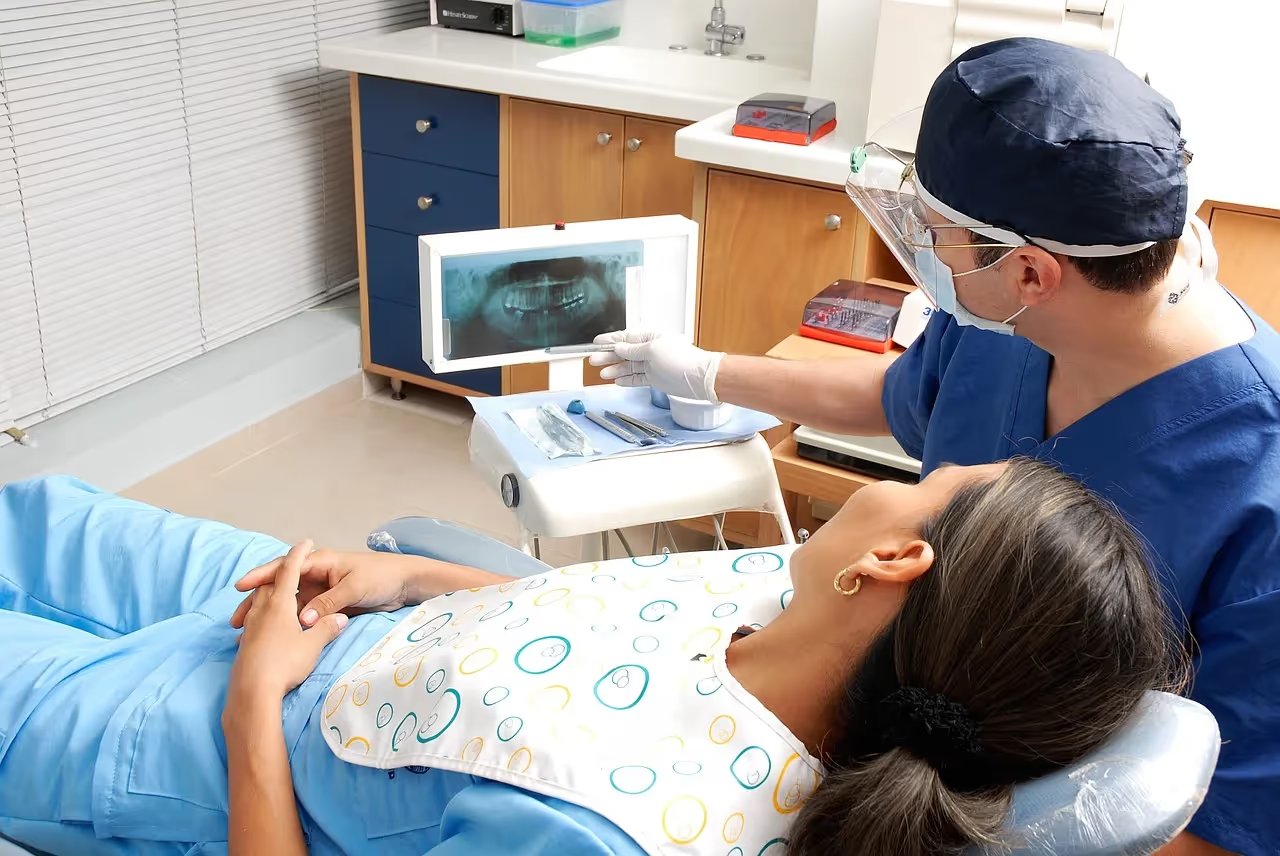
The patient has been faithfully coming for the last __ years yet we still ask if they have a dog, wear a guard, and use an electric toothbrush. Know them, enlist trust with them, your treatment acceptance and recall metrics will thank you.
Patients expect team members to treat them with respect, provide quality care and be punctual with appointment times. What they don’t expect is for you to anticipate their needs. Strive to anticipate and create the WOW factor that will leave your patients ready to accept treatment, keep their continuing care appointments and send referrals!
Buying a Dental Practice While Working as an Associate: How to Make the Transition Smoother
Buying a dental practice is one of the most exciting—and complex—steps in a dentist’s career. Whether you are currently working as an associate or preparing to purchase a practice while not actively practicing, the process can feel overwhelming. There are checklists to manage, timelines to coordinate, professionals to consult, and decisions that can have a lasting impact on your ownership experience.
In many ways, buying a practice can feel like building a house. You need the right plan, the right sequence, and the right team helping you make informed decisions. Without experienced guidance, it is easy to rely on guesswork, internet research, and advice that may not fit your specific situation.
The Challenge: Too Many Moving Pieces
A successful practice transition requires more than simply reviewing legal documents, negotiating terms, or understanding the valuation. Those pieces are important, but ownership readiness also depends on the operational details that happen before and after closing.
New owners must think through credentialing, revenue cycle management, staffing, patient communication, profitability opportunities, vendor transitions, systems, scheduling, and team expectations. Each decision affects how smoothly the practice moves from one owner to the next.
Why Experienced Guidance Matters
Working with someone who understands the logistical side of dental practice ownership can make the entire process feel less reactive and more strategic. The right advisor does more than help coordinate legal work, lease language, building considerations, valuations, and negotiations. They also help you prepare for the practical realities of stepping into ownership.
Think of this role like a general contractor for your transition. A strong advisor helps align the right people, clarify the timeline, anticipate gaps, and keep the process moving toward the outcome you want.
Key Areas to Address Before and After Closing
· Strategic credentialing: Planning ahead so insurance participation and reimbursement timelines do not create unnecessary disruption.
· Revenue cycle management: Reviewing billing, collections, claims, and follow-up systems to protect cash flow from day one.
· Profitability opportunities: Identifying gaps in scheduling, case acceptance, hygiene performance, fees, overhead, and operational efficiency.
· Team evaluation and hiring: Understanding which roles are essential, where support is needed, and whether every existing team member is the right fit moving forward.
· Patient and team transition: Entering the practice with respect, clarity, and a plan thatsupports trust with both the team and patient base.
Ownership Starts Before the Closing Date
The most successful transitions are rarely accidental. They are planned with intention. Before closing, future owners should understand what needs to happen, who is responsible for each step, and how each decision supports the long-term health of the practice.
After closing, the focus shifts to leadership, communication, implementation, and refinement. This is where preparation pays off. With a clear plan, you can step into ownership with greater confidence and avoid preventable missteps.